
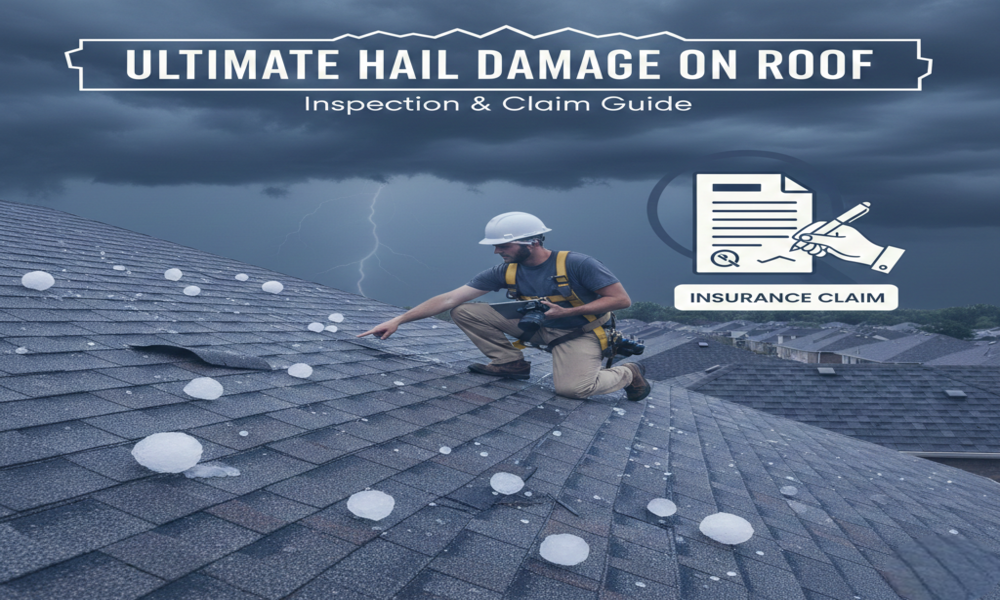
Hail damage to roofs is one of the greatest underestimations in terms of both commercial and residential properties. This damage will result in the demise of your roof by creating a compromised protective covering that shields the building from water intrusion, UV exposure and structural deterioration. Small hail can result in destruction to roofing surfaces through granule loss, brusing of shingles, cracks in tiles, punctured membranes and damaged flashing. These types of damages will cause the failure of the roofing system.
In most cases, hail damage on roof surfaces cannot be seen from the ground level after a high-volume hail storm. However, on the underside of roofing materials, impact points can create microfractures that have the potential for expansion over time. If not addressed, this damage will cause leakage, soaking of insulation, mold formation and deterioration of the building structure. Taking action quickly helps to preserve your property value and insurance company claim rights. An immediate inspection will provide the ability to accurately document damages and prevent your ability to file a claim should an insurance company deny your claim due to a delay in notification.
Table of Contents
How Hail Damage on Roof Occurs During Storms
Ice balls, or chunks of ice, fall to earth at great speed in hailstorms. The scale, density, wind velocity, and type of roofing material will determine how bad any roof gets from hail damage. Damage to an asphalt shingle will include damage to protective granules on the shingle, denting of metallic roofing panels, and cracking/shattering of clay tile roof coverings.
The force from incoming hail typically will dislodge the protective granules from an asphalt shingle, which protects shingles from ultraviolet light. When an asphalt shingle is no longer covered with granules, the asphalt matting will quickly deteriorate. Hail damage to the membrane (roof covering) of a flat or low-slope roof system will lead to puncturing and cause the waterproofing to fail. This will lead to hidden moisture intrusion that can spread under the underlayment and deck once the ineffective waterproofing fails.
Wind-driven hail also causes problems, as it impacts roofs from angles that affect ridges, valleys and other locations where there are vents, skylights, and flashing. Besides the additional damage hail will cause by striking roofs from potentially damaging angles, it is important to have a focused inspection performed at any of these potential locations because hail damage on roof edges can lead to progressive failure throughout the entire building.
Visible Signs of Hail Damage on Roof Shingles
Finding hail-related damage on any shingle roof takes special consideration of the following aspects:
- Circular impacted dent with a darkened center.
- Loss of granules revealing the underlying asphalt.
- Bruises that are soft and spongy when pressed down on.
- Fractured or cracked shingles.
- Damaged flashing and/or venting from denting of metal.
If there is evidence of granule buildup in the gutters, it is also an indication of hail damage to the roof surface. The loss of granules from the roof surface means that there has been a significant deterioration of that surface. Over time, the areas that are left exposed will tend to be brittle and become susceptible to leaking.
Hidden Structural Risks from Hail Damage on Roof Systems
Although cosmetic damage may not be a big deal, structural issues with roofs can pose an even greater problem. Hail damage to the roof decking can result in moisture getting into the plywood or OSB boards. With moisture getting in, the structural substrate becomes weak due to moisture infiltration, which will also promote mold growth.
On commercial roofs, hail damage on the roof membranes can result in the separation of seams or puncturing of the TPO, EPDM, or PVC material. Once the insulation layers are absorbed with moisture, they will lose their thermal efficiency and the cost of energy will go up.
Even though metal roofs are sturdy, they are still susceptible to hail damage. Severe hail damage on the metal roof panels can result in busted locking seams, which can allow wind uplift and water to enter the system. Long-term effects will include corrosion and rust formation, which will lead to an early failure of the system.
Professional Inspection for Hail Damage on Roof
After a hailstorm, an experienced professional inspector needs to evaluate all roof elements (incl. shingles, flashing, vents, gutters, fascia, soffits, and the interior attic) for hail damage.
The inspection process will include:
- Photo documentation of all points of impact
- Measurements of all areas of damage
- Determine whether structural damage has occurred
- Identifying collateral damage
Accurate roof measurement services documentation for insurance purposes will provide assurance to the insurance adjuster by supplying proof of functional impairment as opposed to cosmetic. An experienced inspector provides measurable proof of storm damage to support your claim.
Insurance Claims Process for Hail Damage on Roof
It takes some careful planning to file an insurance claim for hail damage to your roofing system. In most cases, the filing process consists of the following:
- Report the damage
- Schedule a formal inspection.
- Submit supporting documentation
- Meet with the insurance adjuster.
- Receive the claim decision.
When evaluating hail damage to the roofing system, insurance companies will base their decision on what is covered by your policy, whether the storm that caused the damage has been verified, and how much visible damage was done to the roofing surface. In some cases, damage to your roof that would require a complete roof replacement if there is structural damage to the roofing system due to hail.
Difference Between Cosmetic and Functional Hail Damage on Roof
In most instances, insurance companies distinguish between the two types of hail damage to roof systems: cosmetic and functional. Cosmetic hail damage consists of minor granule loss (or dents on the surface) that will not affect the roof’s intended functionality right away. Conversely, functional hail damage affects how well a roof can keep water from getting in.
Functional hail damage consists of the following types of roof shingle hail damage:
- Cracked or split shingles
- Fiberglass matting showing through
- Shingle pieces broken into two or more pieces
- Punctured or torn membrane;
- Flashing seals compromised.
It is important for you to know the differences between these two classifications when negotiating with your insurer. Most homeowner’s insurance policies cover repairs or replacement for functional hail damage to roofing systems.
Impact of Hail Damage on Roof Lifespan
The lifespan of a rooftop system can be shortened significantly with just minor hail roof damage. Roofs are built to withstand the elements, but the impact of hail on roofs tends to lead to premature aging due to the impact causing fractures.
The loss of granules will expose asphalt to the sun and can give asphalt a brittle-like appearance that will curl. As hail damage continues to impact roof shingles, water will begin to accumulate in the cracks, which can cause further damage as the roof ages. The coating of a metal roof may break down due to hail damage, resulting in a greater risk of corrosion.
Conducting inspections after the occurrence of a storm will allow issues of hail roofing systems to be repaired before they can incur an irreversible aging process. Repairing the roof before it becomes irreparably aged will help ensure that the roofing system will last longer and maintain the value of the original investment.
Repair vs Replacement After Hail Damage on Roof
How to determine whether to repair or replace depends on how extensive the hail damage is throughout the roof. If the hail damaged are localized to certain areas of the roof, you may be eligible for a sectional repair. In some cases, if the hail caused much granule loss or damaged the structure of the roof, it may require you to have a complete roof replacement.
Some of the criteria used to determine if you can repair or replace the roof include:
- The age of the roofing system
- The amount of impact per square foot
- The policy language in your insurance coverage
- The local building code requirements
If the hail damage on your roofing materials exceeds 25% of the total area of the roof, many insurance providers will approve a full replacement in order to achieve uniform performance and maintain warranty compliance.
Preventative Strategies Against Future Hail Damage on Roof
Hailstorm damage cannot be eliminated, however, by using certain mitigation measures, the impact from storm events can be reduced. The use of impact-rated shingles (Class 4) will increase the durability of the roof. Using a reinforced underlayment and providing adequate ventilation in the attic will help increase the performance of the roof.
Ongoing upkeep will guarantee that the sealant and flashing remain intact. Following severe weather conditions, it is essential to inspect the roof immediately to identify if there was any new hail damage to the roof prior to any future harm occurring as a consequence.
If you upgrade your existing roofing when you replace it, your roofing will have added durability against being damaged again from a hail storm, providing you with added protection not only to your property but also to your insurance rates.
Why Accurate Measurement Is Essential for Hail Damage on Roof Claims
To accurately calculate the price of repairing hail damage to a roof for insurance purposes, precise measurements must be obtained. If the roof report is correct, then the insurance company will have an accurate amount of materials and labour needed to pay out on the hail damage claim.
A professional aerial roof measurement report will give you:
- the exact square footage of the roof.
- the slope and pitch of the roof.
- an analysis of the waste factor.
- a diagram of the roof.
Having complete and exact measurements will prevent insurers from underestimating the damage caused by hail to roofs, and will also help ensure contractors receive full payment for restoring roofs.
Common Mistakes When Handling Hail Damage on Roof
After a storm, property owners often make expensive mistakes, such as:
- Waiting too long to inspect;
- Doing temporary repairs themselves;
- Not keeping good notes regarding the damage;
- Accepting low initial settlement offers.
A prompt professional assessment of the hail damage to roof systems yields a more accurate evaluation. When documentation is not kept, the strength of the claim will be weakened and the payout for the claim may be less than expected.
Conclusion: Protecting Your Property from Hail Damage on Roof
Extreme weather conditions can create serious problems for roofs, affecting their strength, shortening their lifespan, and raising the cost of maintaining the roof into the future. In order to recover fully, an immediate inspection, thorough documentation of any damage, and handling of any insurance claim must occur.
Recognizing the signs of hail damage, obtaining a professional to evaluate any hail damage, and obtaining accurate measurements of the damage will assist property owners with restoring their roofs. By proactively managing hail damage on roof structure, you help to safeguard your financial investment, ensure safety, and increase the likelihood of your roof lasting for its intended life.
FAQs
1. How do I identify hail damage on roof after a storm?
Check for bruised shingles, granule loss, cracked tiles, dented vents and debris in the gutter as indicators of hail damage to your roofing materials.
2. Does homeowners insurance cover hail damage on roof repairs?
Most standard homeowners insurance policies provide coverage for hail damage to your roof if there is functional damage to your roof, as well as if you file your claim within the terms and conditions provided in your insurance policy.
3. Can small hail cause serious hail damage on roof systems?
Yes; Smaller size pieces of hail can dislodge granules, weaken the shingles, and/or shorten the lifespan of your roofing products.
4. How soon should I inspect hail damage on roof after a storm?
You should schedule a thorough, detailed inspection by a professional certified contractor as soon as possible (within a few days) after a storm event in order to document the hail damage to your roof as necessary for the submission of your insurance claim.
5. Should I repair or replace my roof after hail damage on roof?
Depending on the severity or extent of the hail-related damage to your roof, a full roof replacement is sometimes the only option available if there is widespread structural damage to the original roof decking and framing.